

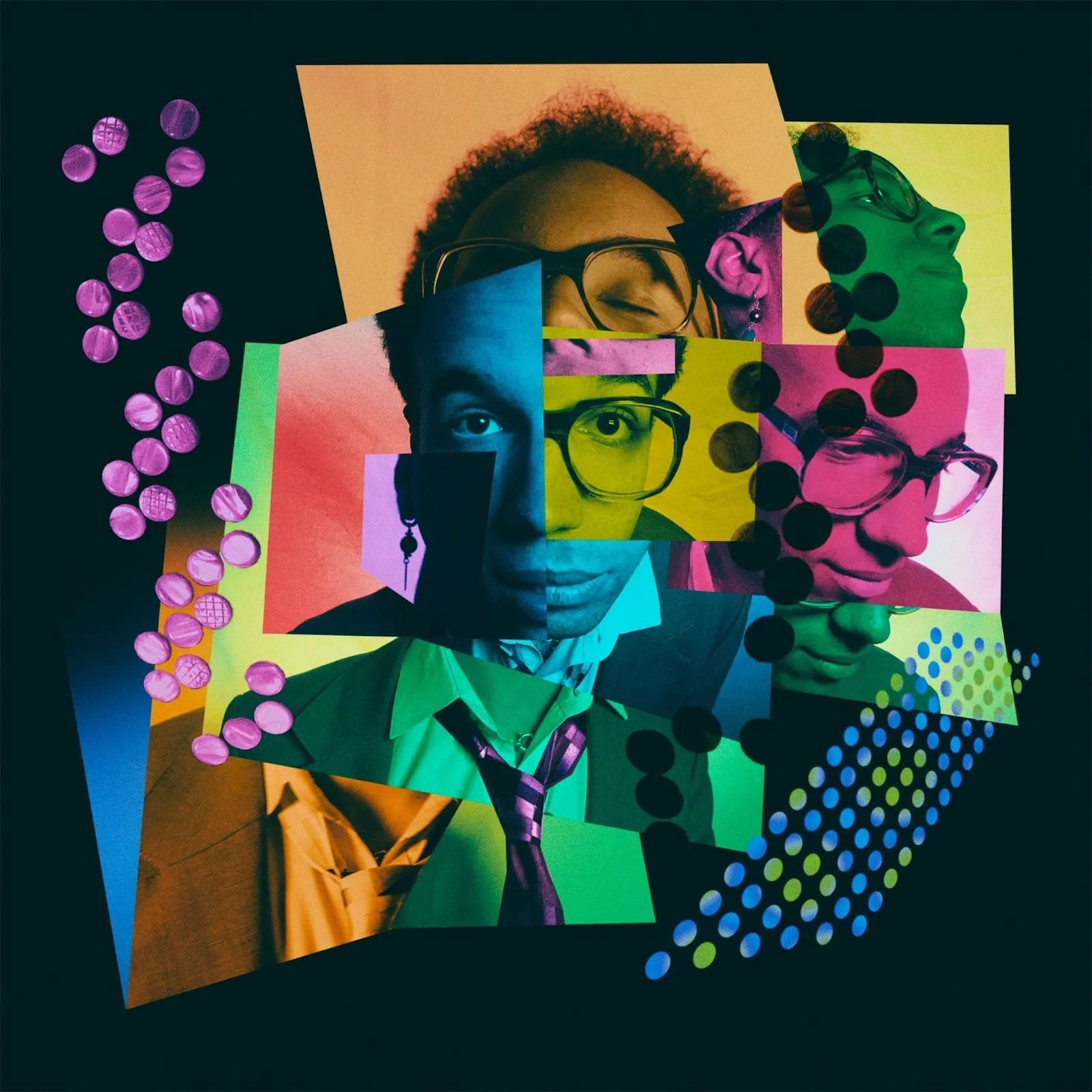
// Photo courtesy of Valentin Folliet
WHRB recently had the opportunity to chat with French accordionist Théo Ould right before his North American debut tour. One of the stops is here in Cambridge at Longy’s Edward M. Pickman Hall, where Ould will perform as part of the Celebrity Series of Boston on Tuesday, December 2 in a program entitled “In the Footsteps of Piazzolla.” This solo recital takes place after the September release of Ould's latest album, Piazzolla: Balada para un loco, which features compositions arranged by the accordionist himself. In this interview, Théo Ould shares with us Astor Piazzolla’s impact on him as a musician. He also tells us about the Argentine composer’s inspirations and some of the composers who were inspired by him. To learn more about the upcoming Celebrity Series of Boston program featuring Théo Ould, click here.
The transcript below has been edited for conciseness and clarity.
WHRB: Especially in the classical music world, the accordion is not as popular as other instruments like the violin or piano. What led you to begin playing the accordion?
Théo Ould: When I was around three years old, I used to listen to a lot of Astor Piazzolla. My mom had some recordings of him. Of course, it was the bandoneon, not exactly the accordion, but no one in my family was a musician, so we could not tell the difference. I wanted to play this music, especially a piece called Libertango. When my mom saw that I was so into music, she brought me to the Marseille Conservatory. When I saw the instrument itself for the first time, I was amazed by it because it was like a spaceship and a typewriter. I wanted to push all the buttons and understand exactly what the buttons could do. So that is how I first started the accordion when I was around six or seven. I think that in France, especially in Marseille, it wasn't a strange choice. The Marseille Conservatory has two or maybe three accordion classes now, so around 60 students. I think that since the 80s, almost every conservatory in France has had an accordion class. When I used to teach, I would always ask my students why they wanted to begin the accordion, and I always had answers like, "Because I can feel the vibrations on my chest when playing it," or "Because it's so fun," or "Because I heard this song on the TV," et cetera. But it was never because it's a rare instrument. It's more common in France and in Europe in general. But of course, in the United States that's not the case. So this is also why I'm here.
WHRB: What inspired you to focus on Piazzolla’s music for your latest album, Piazzolla: Balada para un loco?
Théo: I began the accordion in order to play some Astor Piazzolla, but after that, when I was a teenager, I was more in love with classical repertoire, like Mozart, Bach, and Brahms. At this point, I was a little bit frustrated with the instrument because when I was 13, I couldn't play any Bach on the accordion. So I started to play the piano and take conducting lessons. When I was 17, I decided to audition for the Paris Conservatory with the accordion. And when I got in, it was like a new world opening in front of me because this is where I truly learned all the possibilities of this instrument in terms of repertoire. This is when I started to specialize in classical music and contemporary music. So this is what I've been doing for the past 10 years, almost—playing music of Bach, Rameau, Magnus Lindberg, who is a great contemporary composer, and others. I didn’t allow myself to play any Astor Piazzolla or folk-inspired classical music because I just wanted to show that the accordion was something else. For example, the recording I did before Piazzolla was focused on contemporary electroacoustic music and classical music. But at some point, I reconnected with my first love for Piazzolla, and I realized that for the past 10 years, I had been promoting classical music on the accordion. So now that was done, in a way, and I could come back to Astor Piazzolla. It was so much fun. I wanted this album to be really personal, because this is, I think, the biggest challenge with Piazzolla: he's so well known that everyone has already recorded something about him. I think the challenge is to create something that is personal, which is why I decided to create all the arrangements myself for string quintet and accordion.
WHRB: You mentioned that you wanted to make this album your own personal project, especially since Piazzolla is so well known. What are some creative choices you made that make these arrangements uniquely yours?
Théo: In the recording, there are some famous works like The Four Seasons of Buenos Aires, which is very interesting because the score is really precise. So when I was arranging that, I tried to create new textures with the string quintet, but I kind of followed the original score. But with some other pieces like Violentango, Meditango, and Vuelva al Sur, the score at our disposal is just two staves and a theme. So I could create so many things based on that. For example, with Violentango, I created an entire part after the theme. This was so fun, and I could just be so free with it. With Vuelva al Sur, I changed the rhythm in the beginning. Normally it's in four, but I put it in three, like a little waltz from Venezuela. I quoted Ravel's quartet movement with the pizzicatos at the beginning. In Meditango, I transformed a cadenza for the accordion and quoted some Chick Corea, Gary Burton, and basically all of my influences. So, of course, classical music, but also rock and roll and jazz, just came into my mind, and I just wanted to transcribe those thoughts into a score. I think Piazzolla did that in a way because he was so passionate about classical music. He came to Paris to study with Nadia Boulanger to learn how to create this music. He said once that he wanted his audience to be the same as the audiences that attended Stravinsky's and Bartók's concerts. So Piazzolla transformed popular music, the tango, into something that is no longer meant to be just danced to, but also listened to. I think there's a connection between me incorporating my own influences into his music and what he did with transforming the tango.
WHRB: You collaborated with Quatuor Bilitis, double bassist Blanche Stromboli, and mezzo-soprano Marina Viotti for this album. Are there any other instruments you think the accordion pairs well with besides strings and voice?
Théo: I've been playing for some years with a clarinet player, and I think it works really well with the accordion. But most of the time I'm playing with string instruments. I mean, it's an obvious combination because the accordion, as it's a wind instrument, has the possibility of doing all kinds of expressions that match the string instruments. The way we use our bellows is the exact same way they use the bow. But of course, with other wind instruments, it is just a coincidence, because I haven't met an oboe player, for example, with whom I would like to play. The accordion has this specificity to be able to blend into a sound environment. But it can also be distinguished from the strings. I think we can do almost anything in terms of combinations with this instrument. I know that there's a trio in France composed of one accordion and two percussionists, and it's awesome what they're doing. It's called the KDM Trio.
WHRB: How would you describe the Celebrity Series of Boston’s “In the Footsteps of Piazzolla” program?
Théo: Besides the album, I wanted to create a solo recital in which I'm following in the footsteps of Piazzolla. I'm trying to figure out who his inspirations were and who he has inspired after him. He first encountered classical music when he was six because he would listen to amateur cellists who were practicing the Cello Suites by Bach. He fell in love with this music, so he then wanted to study it. He started studying with Ginastera, and he was really fond of Villa-Lobos' music. So this is why I play some Bach to open this concert. I also play Rameau, because he was French, obviously, and Villa-Lobos. Actually, in an interview, Piazzolla said that he wanted to be the Argentinian Villa-Lobos. Then, I'm playing some Bartók because of what I said previously; Piazzolla wanted the same audience. Bartók did the same thing Piazzolla did with tango music, but he did it with Eastern European folk music. I'm playing Bartók's Mikrokosmos, which are six Bulgarian dances. And I'm also playing some contemporary composers who were inspired by Piazzolla. For example, Thomas Gubitsch, who at some point was Piazzolla's guitarist. I've been working with Thomas for a long time because he lives in Paris. He was a rock star in Argentina around 1977 and 1978. He played in a band called Invisible, and he did two recordings with them. I'm also playing music by Luis di Matteo. He's not very well known, but he played in Piazzola's Orquesta Típica. He did some more contemporary work than Piazzolla, I would say. And I'm playing Carlos Guastavino, who was nicknamed “The Schubert of the Pampas.” While Piazzolla was considered the urban composer, Guastavino was the countryside composer. So the program includes Piazzolla's inspirations, people Piazzolla inspired, and of course some Piazzolla.
WHRB: Who is one composer featured in this program that you wish more people would listen to?
Théo: Good question. Maybe I'd say Villa-Lobos. When I dove into this music, I knew—because I read some Piazzolla interviews—that Piazzolla was really fond of Villa-Lobos' music. And I realized that, besides the aria from Bachianas Brasileiras No. 5, I did not know anything about him. When I started listening to some recordings of Nelson Freire or whoever, I realized how little I knew about this composer. It's great music, and I'm amazed by the fact that it's so modern, but also so understandable by everyone. For me, it's universal music. I wish more people listened to his music, because in it, there's everything, there's emotions, there's wisdom, there's joy, there's virtuosity. You can find a piece of yourself in his music, or at least, I could. So yeah, I'd say him. But Carlos Guastavino also, because he's so little known and he has written such beautiful pages. But from Piazzolla, I'm playing "Flora's Game" and Pedro y Pedro, which are not very well known. And I'm just so happy to bring those pieces to an audience because they will hear the different inspirations Piazzolla had, since Pedro y Pedro and "Flora's Game" are connected to Bartók and Stravinsky, in a way. I'm sure that if I made you listen to these two pieces, you wouldn't be able to tell that they are Piazzolla's.
WHRB: What are you most looking forward to as you embark on your North American debut tour?
Théo: I'm really glad and surprised, in a good way, that almost all the concerts are sold out or nearly sold out. I'm kind of surprised because nobody in the US knows me. I have the feeling that if the audiences choose to come to my concert, it's because they are interested in the program and the accordion. So I just can't wait to meet this audience and also to see what differences there are between European audiences and North American audiences. But yeah, I'm just super excited, and I can't wait for it to get started.
// Hillary Jean-Gilles ’25 is former DJ and staff writer for Classical Music.