
When asked about my involvement with WHRB, I always tell the same story: I didn’t know anything about jazz before college. I joined the jazz radio because I thought it would “make me cool.”
I’m not sure it did—my “coolness” level is honestly about the same as it was in fall of 2023. But I know who John Coltrane is now, and I definitely listen to a lot more jazz in order to fill up my weekly 2-hour slots (tune in Tuesdays at 10am)!
I’ve been trying to immerse myself in the genre; to go out of my comfort zone of Ella Fitzgerald Sings the Cole Porter Songbook and get into the exclusive club of actual jazz listeners. Because that’s the thing—I don’t really feel like I “get” jazz. When I say I’m a jazz DJ, it feels like I’m only telling a half-truth. I’m expected to know all these names and standards and sub-genres and in reality I still can’t remember how to pronounce Gillespie (I have to look it up every time I broadcast “A Night in Tunisia”).
That’s my roundabout way of saying that last night (Friday, March 27) I really appreciated live jazz for the first time: the Gerald Clayton Trio at the Regattabar. I was apprehensive about my press pass. They’re gonna know I’m a fake! I thought. I don’t know when to clap, or how to tap my foot on the beat! And not only did I expect to feel like an impostor in the audience, but I also had the responsibility of covering the show for a radio station filled with jazz aficionados. How can I write an article about a genre I don’t “get”?
So I guess I’ll tell you about the show from my vantage point, with the language I can: I watched the performers and I heard the music. I don’t know what chords were special and how the arrangements were unique. But I do know that the show brought people together, and that the movement and intention from the musicians was absolutely captivating.
I'll backpedal a bit, to give my qualifications—while I'm insecure about my jazz knowledge, I do know music. I've been a semi-professional singer for almost a decade now, and I'm unlikely to be found without headphones in (my Spotify Wrapped numbers are pretty lofty)! But my enjoyment of music, jazz especially, isn't academic. My listening starts and ends with joy, and there was certainly a lot of that last night!
Before the real music began, the Regattabar was filled with its own music of conversation. The nature of the Regattabar is that you might share a small table with strangers, so the people around me introduced themselves and gave introductions. Last time I was at the Regattabar my tablemate happened to be my mother’s high school English teacher—you never know the connections you’ll make when you buy a ticket.
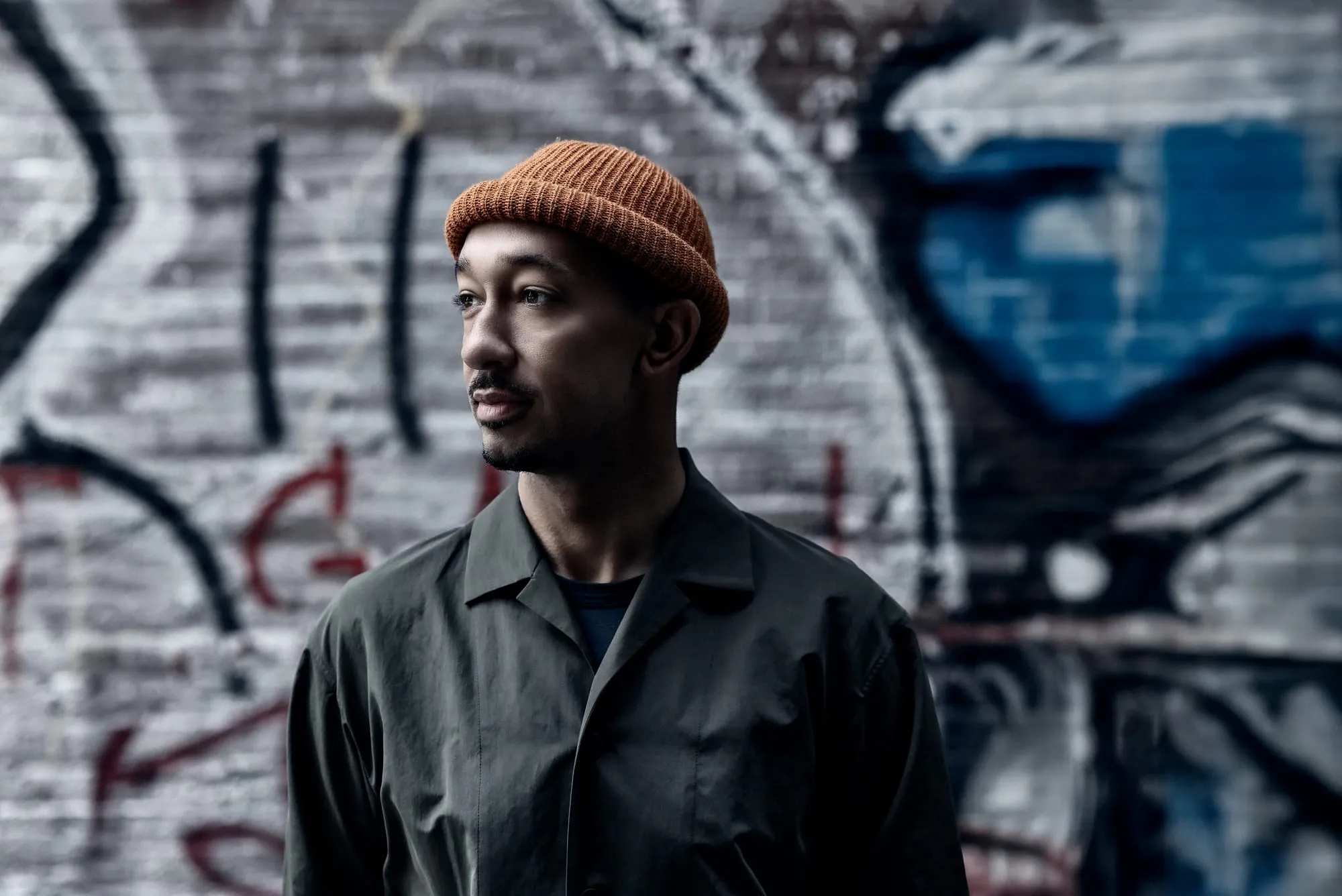
I initially discovered Gerald Clayton off his 2022 album Bells on Sand, particularly from his single with indie singer MARO—the beautiful cross-genre collab "Just A Dream." I’ve been playing pianist Clayton on air ever since, and I figured his might be an accessible concert since I knew I liked his work.
Friday’s trio was composed of Clayton on keys, Rashaan Carter on bass, and Rodney Green on percussion. They started with a contrafact on Billy Strayhorn’s “Upper Manhattan Medical Group” entitled “Under Madhatter Medicinal Groupon,” the riffs of which playfully ran up and down stairs and looked around corners. Listening was an intellectual exercise, sure, but not an exclusive one. I was drawn in, able to appreciate what I could and try to follow where each melody was going. I think that’s what I’m learning to love about jazz: that it’s always moving, and my job as a listener is to track that movement.
Last night, I learned how fun it is to track this movement with a live band! Rashaan Carter on bass bent over his music. His fingers would occasionally lift from their strenuous exercise to adjust his glasses. He looked like he was trying to catch something in the music; like if he didn’t pluck out this melody right now it would escape him. And so he adjusted his glasses with a furrowed brow and went right back to playing to make sure the song stayed trapped on the page, manipulated by his weaving fingers.
Drummer Rodney Green, by contrast, appeared more laid-back. The bright blue lighting of the Regattabar wall behind him gave him a neon halo of contrast, and he was almost vibrating with the cymbals—but vibrating in a relaxed way, a hum rather than an anxious vibration, not just his sticks and his fingers but his whole presence.
And then there was Clayton, who would smile and nod and make faces and wink at his piano like the two of them were sharing a joke. He’d raise his eyebrows and purse his lips and scat over his melodies while he was playing them. His mastery was inviting.
Clayton’s solo piano introductions, like in his arrangement of Dizzy Gillespie’s “Con Alma” or "En la Orilla del Mundo” off Charlie Haden’s Nocturne, had rich chords that flowed into each other with such meandering simplicity that they were more akin to syrup or molasses than running water. But they didn't stall; this was jazz that was going places. Maybe that’s what I’m chasing when I listen to jazz: that feeling of movement, even if sometimes it moves too fast for me to follow.
The journey took us from Miles Davis (“Ah-Leu-Cha”) to Cedar Walton (“I’m Not So Sure”—a crowd favorite and my highlight of the evening). At the end of the show, Clayton gave the audience a choice about whether we wanted to hear “an ugly one or a pretty one” (of course, he ended up playing both).
In trying to decide how to write about jazz, I decided on movement. You don’t have to know everything about bebop to hear the split screen of plodding, footstep drums underneath a twittering, energetic ascending piano line (“Monk’s Mood”). In the lighter pieces, Green’s percussion had a precision that moved like walking in the right shoes, when the weight of your feet hits the pavement just right. And back to my favorite, “I’m Not So Sure”: here, the movement was like a train running smoothly across golden country.
I might not “get” jazz, but perhaps it’s a less exclusive genre than I previously thought. Friday’s show was fun! It’s okay to be a regular person at a jazz show. And every member of the Regattabar’s diverse audience was enraptured at their little round tables, no matter their age or experience. So whether you’re an undergraduate radio DJ or a Berklee musician or a Chemistry major who wants a new activity for a Friday night, consider heading over to the Regattabar and tracking some movement. Who knows—maybe it’ll make you cool.
You can find Gerald Clayton’s music on all streaming platforms. Information about the Regattabar and its upcoming shows is available at www.regattabarjazz.com. Charlotte Stokes ‘27 is a jazz DJ, staff writer, and Artist Relations Director for WHRB.